

Kanwar Yatra 2026: Dates, Rules, Routes & the Controversy Explained
Kanwar Yatra 2026: Everything You Need to Know
In short
Kanwar Yatra 2026 runs July 30 to August 11. Real dates, the four types of Kanwar, actual rules, routes, and the ongoing nameplate controversy, explained factually.
Cite this page: https://www.whatiswiki.com/kanwar-yatra-explained
Introduction
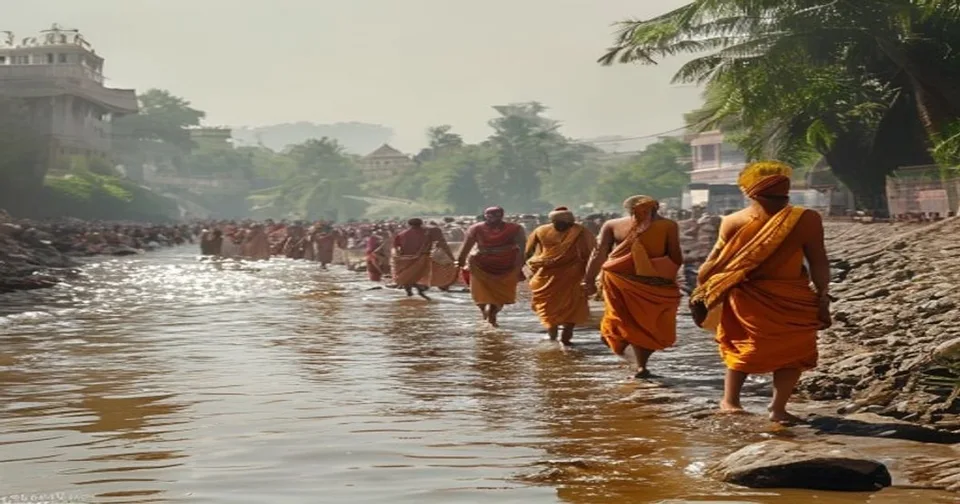
Quick answer: Kanwar Yatra 2026 began on Thursday, July 30 and runs until Sawan Shivratri on Tuesday, August 11. On the final day, devotees (Kanwariyas) perform jalabhishek, pouring holy Ganga water on a Shiva linga. If you are searching now, the yatra is happening right now.
It is considered one of the largest annual religious gatherings in the world, with pilgrims traveling from Uttar Pradesh, Uttarakhand, Delhi, Haryana, Rajasthan, Bihar, and Jharkhand. Common Ganga collection points include Haridwar (Har Ki Pauri), Gaumukh and Gangotri, and a separate eastern corridor linking Sultanganj to Baidyanath Dham (Bihar/Jharkhand).
The origin story
In Hindu mythology, during the Samudra Manthan (the churning of the cosmic ocean), a deadly poison called Halahal emerged. To save creation, Lord Shiva drank the poison, which turned his throat blue and gave him the name Neelkanth ("blue-throated one").
In many tellings, the gods (and sometimes other figures) then offered sacred Ganga waters to ease Shiva's suffering. Kanwar Yatra reenacts this devotion: pilgrims carry Ganga water specifically to offer it at Shiva temples, as an act of gratitude and penance.
The four types of Kanwar
Not all Kanwariyas make the same journey. There are four commonly recognized forms, with real differences in intensity and rules:
| Type | What it involves |
|---|---|
| Samanya (normal) Kanwar | Most common form: walking or traveling at a steady, manageable pace to collect and return with the water. |
| Dak Kanwar | Considered the toughest: pilgrims run or move quickly, often with fewer stops, to deliver the water faster. |
| Khadi (standing) Kanwar | The Kanwar is not set down, even during rest; companions or support structures hold it while the pilgrim rests. |
| Dandi Kanwar | The most physically demanding form, involving repeated prostrations along the route as a measure of penance. |
The two rules that define the pilgrimage
- The Kanwar must never touch the ground once filled with Ganga water, until it is formally offered at a Shiva temple.
- Complete sobriety and a satvik lifestyle: many pilgrims observe fasting and strict discipline, including celibacy and abstaining from non-vegetarian food, alcohol, and intoxicants during the yatra.
Real routes, not generic ones
The main artery for many pilgrims is National Highway 34 (formerly NH-58), connecting Delhi, Meerut, Muzaffarnagar, Roorkee, and Haridwar. Har Ki Pauri in Haridwar is one of the largest Ganga water collection points.
Other major source points include Gaumukh and Gangotri in Uttarakhand. In eastern India, a separate corridor runs via Sultanganj to Baidyanath Dham (Bihar/Jharkhand), serving pilgrims coming from UP-adjacent and eastern regions.
Many Kanwariyas walk barefoot in saffron clothing, but modern yatra culture also includes travel by bicycle, motorcycle, or decorated mini-trucks with loudspeakers. This is sometimes controversial due to noise levels in residential and hospital zones along the route.
The scale, and what it means logistically
Estimates vary widely by year and by source. For example, some reports have cited figures in the range of over 5 crore pilgrims to Haridwar alone, though the exact numbers are difficult to independently verify at that scale.
Because it is treated as a major logistical operation, district administrations and police agencies implement phased traffic restrictions and diversions, particularly on the Delhi-Meerut corridor and other key routes. Crowd monitoring and surveillance may be used in some areas.
In recent seasons, many organizers have also pushed plastic-free practices along portions of the yatra route (including restrictions on single-use items) as part of environmental and public-health planning.
The nameplate and QR code controversy
This is a recurring controversy connected to the yatra since 2024, and it deserves a factual, two-sided explanation rather than being ignored.
What happened: ahead of the yatra season, directives in Uttar Pradesh and Uttarakhand asked hotels, dhabas, and food carts to prominently display owner/staff names (and other compliance details). In later years, additional display requirements were also discussed, including QR-related information.
The government's stated rationale: officials described the measures as being about consumer transparency, food hygiene compliance, and maintaining law and order during a period when large numbers of pilgrims (often fasting and following strict dietary rules) eat along unfamiliar routes.
The core objection: critics argued the directive could function as religious profiling, since it was widely understood as identifying Muslim-owned businesses to pilgrims. Prominent voices in criticism have included public figures and political leaders.
What courts did: in 2024, the Supreme Court stayed the original nameplate directive. In a related later case about a follow-up QR-related requirement, the court did not block the entire approach but narrowed restrictions to what was already legally required.
Real incidents connected to the dispute: there have been reported cases where individuals tried to verify a worker's religion after scanning/seeing a code or where there was vandalism and assaults following disagreements tied to the display requirements. These incidents are part of why tensions often rise during each Sawan season.
A note on spelling variations (Kanwar / Kawad / Kanwad) and Akola Kawad Yatra
Kanwar, Kawad, and Kanwad are common alternate spellings referring to the same pilgrimage in many contexts.
If you searched for something like Akola Kawad Yatra as a specific local event, that can refer to a distinct regional observance. We cannot independently verify local event details from national coverage, so for Akola-area observances it is best to check local sources directly.
Frequently asked questions
See the FAQ section below for short answers on dates, rules, routes, and the nameplate controversy.
Key takeaways
- Kanwar Yatra 2026 runs July 30 to August 11, ending on Sawan Shivratri.
- Many pilgrims treat the yatra as strict discipline, with sobriety and satvik practices.
- There are four commonly recognized Kanwar types with different intensity and practical rules.
- Main Ganga collection points include Haridwar (Har Ki Pauri), Gaumukh, Gangotri, and the Sultanganj-Baidyanath Dham corridor.
- Traffic restrictions, crowd monitoring, and plastic-free initiatives are part of the yatra logistics.
- The nameplate and QR-related controversy is recurring and presented here neutrally with both rationales and objections.
- Spelling variations (Kanwar/Kawad/Kanwad) are common; local Akola events may differ.
Frequently asked questions
When is Kanwar Yatra 2026?
It began Thursday, July 30, 2026, and concludes on Sawan Shivratri, Tuesday, August 11, 2026.
Who started Kanwar Yatra?
There is no single historical founder. It is rooted in Hindu mythology connected to Lord Shiva: during Samudra Manthan, Shiva drank poison and was then offered Ganga waters, which devotion later became an organized annual pilgrimage across generations.
What is the Kanwar Yatra controversy about?
Government directives requiring food establishments along the route to display owner/staff details, licenses, and related compliance information (including QR-related display elements). Critics argue it functions as religious profiling of Muslim-owned businesses; supporters describe it as transparency, hygiene, and law-and-order measures.
What are the main rules of Kanwar Yatra?
The Kanwar must never touch the ground once filled with Ganga water, and pilgrims often maintain strict sobriety and satvik discipline, including fasting and avoiding alcohol and intoxicants.
How far do Kanwariyas typically walk?
Distances vary by route and starting point, but 100+ kilometers on foot is common. Some pilgrims travel much farther depending on where their home temple is relative to major collection points like Haridwar.
When does Kanwar Yatra 2026 end?
Sawan Shivratri on Tuesday, August 11, 2026, when most pilgrims perform jalabhishek.
Conclusion
Kanwar Yatra is happening right now for many devotees, with millions traveling to carry and offer Ganga water at Shiva temples. If you are following the yatra this year, the most important things to remember are the core rules (keeping the Kanwar above ground) and understanding the nameplate dispute with a two-sided, fact-first approach.
References
- redBus Blog
- StayVista Journal
- Republic World
- Tribune India
- BBC News
- Deccan Herald
Was this article helpful?
No login required. One response per visitor.